
Limb Amputation Articles & Analysis
27 news found
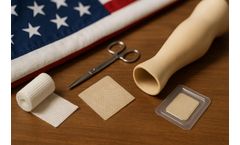
House Appropriations Committee’s Fiscal Year 2027 Military Construction and Veterans Affairs (MilCon/VA) appropriations report highlights the role of regenerative wound technologies, including fish-skin-derived products, in limb preservation and value-driven care within the Veterans Health Administration (VHA).The report acknowledges the ongoing burden of chronic, complex, and ...
ByKerecis

We believe the REVA absorbable scaffold has the potential to reduce limb amputations, and possibly save lives.” In addition to the MOTIV scaffold, REVA is in the final development stages for their TyroSphere embolic bead platform. ...

Severe peripheral vascular disease (PVD) is caused by the formation of blockages in arteries, which reduces blood supply to the brain, heart, kidneys and limbs causing strokes, heart attacks, kidney failure and limb amputations. ...

It´s the first trial to demonstrate the benefits of dual pathway inhibition - with the anticoagulant Xarelto in combination with the antiplatelet aspirin - in these PAD patients at high risk of major adverse cardiovascular events (MACE) and especially major adverse limb events (MALE). "This approval is an important advance for patients with PAD in Japan," said Dr. ...
ByBayer AG

Safety: Freedom from device- and procedure-related death through 30 days and a composite of major target limb amputation and CD-TVR @ 12 months. Miquel Craven-Bartle Capella CEO of Cardionovum® commented: “We are very happy with this first enrollment. ...

Neuros Medical, a bioelectric technology company, has developed the Altius system for the treatment of chronic post-amputation pain (Phantom Limb Pain and Residual Limb Pain). Altius incorporates the Company’s patented platform technology, On-Demand Bioelectric Nerve Block. ...

ACP-01 has been used to treat over 300 patients, and it is the subject of a randomized, placebo-controlled, double-blind trial of its safety and efficacy in patients with advanced critical limb ischemia who have exhausted all other options to save their limb from amputation. ...
ACP-01 has been used to treat over 300 patients, and it is the subject of a randomized, placebo-controlled, double blind trial of its safety and efficacy in patients with advanced critical limb ischemia who have exhausted all other options to save their limb from amputation. ...
ACP-01 has been used to treat over 300 patients, and it is the subject of a randomized, placebo-controlled, double blind trial of its safety and efficacy in patients with advanced critical limb ischemia who have exhausted all other options to save their limb from amputation. ...

“Diabetic ulcers are the leading cause of non-traumatic lower limb amputations, and dramatically increase patient mortality. Despite a huge unmet need, no pharmacological wound healing product has been approved for more than 10 years,” said Thomas Wirth, CSO of Aurealis Therapeutics. ...
ACP-01 has been used to treat over 300 patients, and it is the subject of a randomized, placebo-controlled, double blind trial of its safety and efficacy in patients with advanced critical limb ischemia who have exhausted all other options to save their limb from amputation. ...
ACP-01 is the subject of a randomized, placebo-controlled, double blind trial of its safety and efficacy in patients with advanced critical limb ischemia who have exhausted all other options to save their limb from amputation. ...

SOMERVILLE, Mass., January 18, 2022 — Podimetrics, a virtual care support company dedicated to preventing costly and deadly diabetic amputations, today announced results from its latest research, which compared the health of individuals during and after periods of diabetic foot ulceration — open sores or wounds on the foot, which commonly occur among those with ...

Method: Retrospective observational study on 4,578 Veterans hospitalized for LLA and discharged 2003- 2004, looking at time to all-cause mortality from the amputation surgical date up to the 3 yr anniversary. Results: 1,300 (28.4%) persons received a prescription for a prosthetic limb within 1 yr after the surgical amputation. ...
The combination of ACP-01, an autologous angiogenic cell precursor that has demonstrated improvement of angiogenesis in the heart and limbs of individuals who suffer from ischemia, and cell transplants from human islets or stem cells, hold huge promise in the treatment of diabetes. ...
ACP-01 has been used to treat over 300 patients, and it is the subject of a randomized, placebo-controlled, double blind trial of its safety and efficacy in patients with advanced critical limb ischemia who have exhausted all other options to save their limb from amputation. ...
ACP-01 has been used to treat over 300 patients, and it is the subject of a randomized, placebo-controlled, double blind trial of its safety and efficacy in patients with advanced critical limb ischemia who have exhausted all other options to save their limb from amputation. ...
ACP-01 has been used to treat over 300 patients, and it is the subject of a randomized, placebo-controlled, double blind trial of its safety and efficacy in patients with advanced critical limb ischemia who have exhausted all other options to save their limb from amputation. ...
Neuros Medical, Inc., a medical device company developing innovative high-frequency nerve block technology for patients with intractable post-amputation pain, announced today the completion of enrollment in its pivotal QUEST (High-FreQUEncy Nerve Block for PoST-Amputation Pain) study. ...
In the United States alone, there are nearly two million lower limb amputees, with 160,000 new amputations occurring annually. Chronic post-amputation pain is a significant unmet medical need, as existing treatment options are limited, and consist primarily of opioids and gabapentinoids. Chronic post-amputation pain is ...