


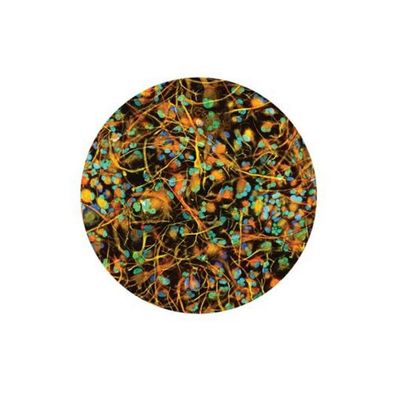
Ncardia - Human iPSC-Derived Astrocytes
Astrocytes are essential players in neurodegenerative disease progression providing a valuable tool for drug discovery and disease modeling. Human iPSC-derived astrocytes generated with our standardized process express key identity markers and support co-culture with human iPSC-derived neurons. Our team can manufacture astrocytes at scale from the iPSC that best fits your project or work with off-the-shelf Ncyte Astrocytes to model relevant disease-phenotypes and support your drug discovery campaigns.
- High purity populations
- Ideal for co-culturing with hiPSC-derived neurons
- Suitable for neuroinflammatory assays
CELLULAR IDENTITY
Ncyte Astrocytes display the characteristic star-shaped morphology of astrocytes in culture. They express key identity markers such us the glial fibrillary acidic protein (GFAP) and makers of mature stage: S100 calcium-binding protein B (S100ß) and aquaporin 4 (AQP4). Further identification based on other biomarkers can be perfomed upon request.
PHYSIOLOGICALLY RELEVANT
Ncyte Astrocytes are a physiologically relevant tool for in vitro testing based on human biology. They recapitulate important functions of astrocytes in the brain, such as, contributing to the homeostasis of the glutamate neurotransmitter, which affects the neuronal firing activity. In this example, co-culturing of human iPSC-derived cortical neurons with Ncyte Astrocytes increased the neuronal firing activity and reduced extracellular levels of glutamate. This enables long-term studies and physiologically relevant disease modeling.
HIGHLY SUITABLE FOR DRUG DISCOVERY
Ncyte Astrocytes are highly suitable for long-term electrophysiological studies and disease modeling of neurodegenerative diseases where neuroinflammation plays an important role. Our team of neuroscientists is experienced in assay development and screening of neuroinflammatory responses and can help you assess the efficacy and safety of your therapeutic candidates in this context.