
- Home
- Equipment
- asia middle east
- stem cell differentiation
Refine by
Locations
- Asia & Middle East
- Afghanistan
- Armenia
- Azerbaijan
- Bahrain
- Bangladesh
- Bhutan
- Brunei Darussalam
- Cambodia
- China
- East Timor
- Georgia
- Guam
- India
- Indonesia
- Iran
- Iraq
- Israel
- Japan
- Jordan
- Kazakhstan
- Kuwait
- Kyrgyzstan
- Laos
- Lebanon
- Malaysia
- Maldives
- Mongolia
- Myanmar
- Nepal
- North Korea
- Oman
- Pakistan
- Palestinian Territories
- Philippines
- Qatar
- Russia
- Saudi Arabia
- Singapore
- South Korea
- Sri Lanka
- Syria
- Taiwan
- Tajikistan
- Thailand
- Turkmenistan
- United Arab Emirates
- Uzbekistan
- Vietnam
- Yemen
Stem Cell Differentiation Equipment Supplied In Asia Middle East
5 equipment items found

Manufactured by:Kangstem Biotech Co., Ltd. based inGangnam-gu, SOUTH KOREA
Kangstem Biotech is developing stem cell therapeutic products for patients suffering from rare and incurable diseases using umbilical cord blood-derived stem ...
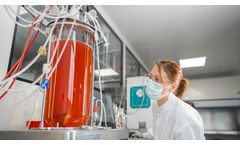
by:Treefrog Therapeutics based inPessac, FRANCE
C-Stem™ is a biomimetic cell culture technology allowing for the mass-production of stem cell- derived therapies with unprecedented cell quality, while cutting manufacturing costs by 10x. ...

Manufactured by:HEALIOS K.K. based inTokyo, JAPAN
Somatic stem cell regenerative medicine utilizes somatic stem cells, which are present in various tissues of the body, with the aim of developing new treatments for diseases for which the current standard of care may be limited or unavailable to many patients, or for which no effective treatments are currently ...
Manufactured by:Kangstem Biotech Co., Ltd. based inGangnam-gu, SOUTH KOREA
USC-CM (Umbilical cord blood-derived Stem Cell Conditioned Media) is obtained from our patented stem cell culture process. It was proved that it contains plenty of growth factors secreted by differentiating stem ...

Manufactured by:NEST Biotechnology Co., Ltd. (NEST) based inWuxi, CHINA
GelNest™ Matrix is derived from mouse tumor tissue and contains extracellular matrix components such as laminin, type IV collagen, heparan sulfate proteoglycans, and more. These components support cell adhesion, differentiation, and proliferation, providing signals for these processes. Additionally, they simulate the characteristics of the basement membrane ...