
Refine by
Locations
- Europe
- Albania
- Andorra
- Austria
- Belarus
- Belgium
- Bosnia & Herzegovina
- Bulgaria
- Croatia
- Cyprus
- Czech Republic
- Denmark
- Estonia
- Faroe Islands
- Finland
- France
- Germany
- Greece
- Hungary
- Iceland
- Ireland
- Italy
- Kosovo
- Latvia
- Liechtenstein
- Lithuania
- Luxembourg
- Macedonia
- Malta
- Moldova
- Monaco
- Montenegro
- Netherlands
- Northern Ireland
- Norway
- Poland
- Portugal
- Romania
- San Marino
- Serbia
- Slovakia
- Slovenia
- Spain
- Sweden
- Switzerland
- Turkey
- Ukraine
- United Kingdom
- Vatican City
Cryogenically Cooled Equipment Supplied In Europe
4 equipment items found
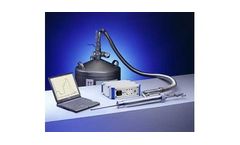
Manufactured by:KGW-Isotherm Karlsruher Glastechnisches Werk - Schieder GmbH based inKarlsruhe, GERMANY
KALTGAS is a tempering system that utilizes the very low temperature of liquid nitrogen as a cooling agent. The Jet vaporizes the liquid nitrogen in a cryogenic container, producing a steady cryogenic gas flow. This LN2 vaporizer (Jet) can be adjusted to minimize liquid nitrogen consumption and to adjust both the cooling rate and ...
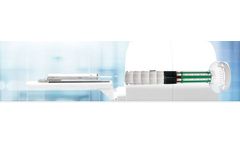
Manufactured by:MR Solutions based inGuildford, UNITED KINGDOM
The MRS*PET INSERT, designed by MR Solutions, facilitates simultaneous PET/MR imaging, enabling the acquisition of multi-parametric information from the same subject with precision. Built to integrate seamlessly with cryogen-free MR systems up to 9.4 Tesla, it offers flexibility in research settings due to its removable nature. This product can function independently of the MR ...
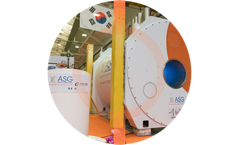
Manufactured by:ASG Superconductors based inGenoa, ITALY
Superconducting technologies and magnets are increasingly finding application in medical diagnostics and therapies. Capitalizing on skills and experiences derived from research and industrial collaborations, ASG is constantly improving its competences and is able to design and build the following types of magnets for medical ...
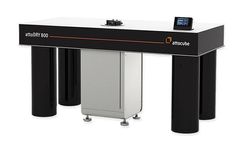
Manufactured by:attocube systems AG based inHaar, GERMANY
Quantum optics experiments often require cryogenic temperatures in combination with optical access to the sample space. Most experimental setups contain numerous optical elements that need to be precisely arranged on an optical table to shape and prepare the incident light, as well as to efficiently collect and convert the emitted light from the sample. The available space on the optical table in ...