
Refine by
Locations
- Europe
- Albania
- Andorra
- Austria
- Belarus
- Belgium
- Bosnia & Herzegovina
- Bulgaria
- Croatia
- Cyprus
- Czech Republic
- Denmark
- Estonia
- Faroe Islands
- Finland
- France
- Germany
- Greece
- Hungary
- Iceland
- Ireland
- Italy
- Kosovo
- Latvia
- Liechtenstein
- Lithuania
- Luxembourg
- Macedonia
- Malta
- Moldova
- Monaco
- Montenegro
- Netherlands
- Northern Ireland
- Norway
- Poland
- Portugal
- Romania
- San Marino
- Serbia
- Slovakia
- Slovenia
- Spain
- Sweden
- Switzerland
- Turkey
- Ukraine
- United Kingdom
- Vatican City
Patch Clamp Equipment Supplied In Europe
4 equipment items found

Manufactured by:Nanion Technologies GmbH based inMunich, GERMANY
The Port-a-Patch is a turn-key miniaturized patch clamp system enabling the user to rapidly generate high quality data, regardless of experience. This makes it ideal as an easy-to-use tool for learning patch clamp electrophysiology. Behind its small and compact appearance lies sophisticated technology, producing ...
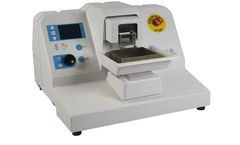
Manufactured by:Campden Instruments (Vibrotome) based inLoughborough, UNITED KINGDOM
The 7000smz-2 Vibrotome by Campden Instruments is a highly precise vibrating microtome designed for creating tissue slices suitable for visual patch clamping and high-resolution imaging. Equipped with a z-axis calibration unit, this vibrotome minimizes blade adjustment errors, ensuring healthy, viable sections with minimal z-axis deflection. Operating at ...

by:3Brain AG based inWadenswil, SWITZERLAND
BioCAM DupleX is a state-of-the-art, high-resolution microelectrode array (also known as multielectrode array) platform for powerful in vitro functional imaging. Its bidirectional electrodes make it possible to simultaneously record high-density electrophysiological data at 20 kHz and induce electrical neural network stimulation from any of the 4,096 microelectrodes. This advanced platform ...

Manufactured by:Aurora Biomed Inc. based inVancouver, BRITISH COLUMBIA (CANADA)
Cell-based assays have always been a powerful tool in biological research laboratories. Recently, cell-based assays have become preferred over traditional biochemical assays by both the pharmaceutical and biotech industry because they provide a more in vivo-like environment for biochemical experiments. However, such assays demand special methods and techniques that are not easily done manually ...