
Refine by
Locations
- Europe
- Albania
- Andorra
- Austria
- Belarus
- Belgium
- Bosnia & Herzegovina
- Bulgaria
- Croatia
- Cyprus
- Czech Republic
- Denmark
- Estonia
- Faroe Islands
- Finland
- France
- Germany
- Greece
- Hungary
- Iceland
- Ireland
- Italy
- Kosovo
- Latvia
- Liechtenstein
- Lithuania
- Luxembourg
- Macedonia
- Malta
- Moldova
- Monaco
- Montenegro
- Netherlands
- Northern Ireland
- Norway
- Poland
- Portugal
- Romania
- San Marino
- Serbia
- Slovakia
- Slovenia
- Spain
- Sweden
- Switzerland
- Turkey
- Ukraine
- United Kingdom
- Vatican City
Prosthesis Positioning Equipment Supplied In Europe
4 equipment items found
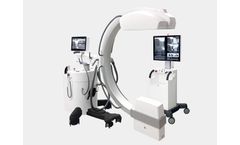
Manufactured by:Italray based inScandicci (Firenze), ITALY
Powerful fluoroscopy mobile c arm units designed for a wide range of applications: from orthopedic surgery (RX control of prosthesis positioning, plate installation), to general surgery (intraoperative control), Cardiac surgery (Pace-Maker implant, electrophysiology), therapy of pain, endoscopy and interventional ...
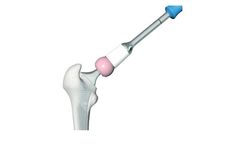
Manufactured by:GO German Orthopedic Implants GmbH based inHamburg, GERMANY
for total hip arthroplasty are small ceramic balls that are placed onto the hip stem. Due to the conical design of the 12/14 taper, the heads sit firmly on the stem and require no additional fixation. EasyHip Ceramic Heads come in three diameters (28 mm, 32 mm and 36 mm) and four head neck lengths, ranging from -4 mm to +8 mm. Detailed correlation can be seen in table ...
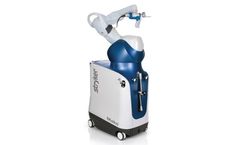
Manufactured by:ab medica s.p.a. based inCerro Maggiore (MI), ITALY
The Mako system is a high-tech robotic platform for orthopaedic prosthetic surgery, which is distinguished from other currently used techniques by its greater precision, accuracy and reproducibility of the surgery. This leads to considerable sparing of the tissues involved in the operation (bone and cartilage) and guarantees better alignment of the parts of the prosthesis, extending the lifetime ...
Manufactured by:Assut Europe based inRome, ITALY
Restorative surgery is one of the most common procedures in the world. The tissue repair technique has led to an increasing use of synthetic (alloplastic) meshes, contributing to significantly decrease the recurrence rate in recent years. A success that is not without risks however: foreign body sensation, migration of the mesh, formation of granulomas, adhesions, seromas, encapsulation and / ...