
Refine by
Cryogenic Pressure Temperature Equipment Supplied In Germany
5 equipment items found
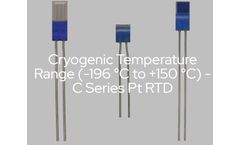
Manufactured by:YAGEO Nexensos GmbH based inKleinostheim, GERMANY
The cryogenic C-thin-film Pt-RTDs were specially developed for the use at very low temperatures, including the cryogenic range. C Series Pt elements combine the ideal curve characteristics of ceramic wire-wound RTDs with the vibration resistance of glass wire-wound RTDs, offering a lower-cost alternative to wire-wound RTDs. Characterized by high long-term stability, excellent temperature shock ...
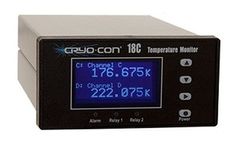
Distributed by:LOT-QuantumDesign based inDarmstadt, GERMANY
We offer cryogenic temperature monitors with eight, four and two multipurpose input channels, supporting diode, platinum RTDs and all other cryogenic resistor temperature sensors, including an optional dual thermocouple input. The temperature range (between 500 mK and 1500 K) depends on the sensor type. A constant voltage AC sensor excitation is used for the extended-range use of negative ...
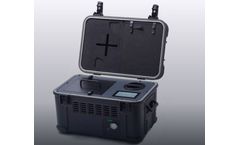
Manufactured by:Cellbox Solutions GmbH based inNorderstedt, GERMANY
Cellbox Ground CD ushers in a new era of cell shipping: Live Cell Shipping. Incubation temperatures can be preset between 28°C and 38°C depending on the ambient temperature and a suitable CO2 concentration can be selected between 0% and 18%. TECHNICAL SPECIFICATIONS: The Cellbox Ground CD, is the first cell shipping CO2 incubator that provides lab-like incubation conditions during ...
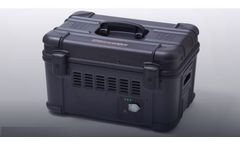
Manufactured by:Cellbox Solutions GmbH based inNorderstedt, GERMANY
The Cellbox Flight CDI is the only shipping incubator that has been awarded an international flight allowance. Incubation temperatures can be preset between 28°C and 38°C depending on the ambient temperature and a suitable CO2 concentration can be selected between 0% and 18%. TECHNICAL SPECIFICATIONS: The Cellbox Flight CDI, is the first cell shipping CO2 incubator that has been awarded ...
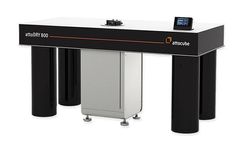
Manufactured by:attocube systems AG based inHaar, GERMANY
Quantum optics experiments often require cryogenic temperatures in combination with optical access to the sample space. Most experimental setups contain numerous optical elements that need to be precisely arranged on an optical table to shape and prepare the incident light, as well as to efficiently collect and convert the emitted light from the sample. The available space on the optical table in ...