
- Home
- Equipment
- usa massachusetts
- oncogene
Refine by
Oncogene Equipment Supplied In Usa Massachusetts
5 equipment items found
by:Sumitomo Pharma Oncology, Inc. based inCambridge, MASSACHUSETTS (USA)
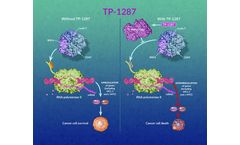
TP-1287 is enzymatically cleaved, yielding the active moiety, a potent inhibitor of CDK9.35 Inhibiting CDK9 is thought to downregulate the transcription of target genes, including MCL-1, reducing leukemic blast viability in MCL-1–dependent hematologic malignancies, and c-MYC, an important oncogene across multiple tumor ...
Manufactured by:LGC SeraCare based inMilford, MASSACHUSETTS (USA)
The Seraseq Tumor Mutation DNA Mix v2 (AF7) HC is a multiplexed mixture of actionable biosynthetic DNA targets precisely blended with a single, well-characterized genomic background. This product is produced under rigorous design control and manufacturing practices to an allelic frequency of 7%, and is offered in a high concentration (HC) format at 25 ng/µL. Designed to assess the overall ...

Manufactured by:MorphoSys AG based inPlanegg, GERMANY
Tulmimetostat is a second-generation EZH2 inhibitor that has been designed to achieve comprehensive target coverage through extended on-target residence time. EZH2 acts as an epigenetic writer and normally places one or more methyl groups on a histone protein, leading to the suppression of gene expression. Some cancers depend on an abnormal pattern of gene expression and re-direct EZH2 to genes ...

Manufactured by:Elicio Therapeutics based inBoston, MASSACHUSETTS (USA)
Our lymph node-targeted mKRAS cancer vaccine; Our Amphiphile (AMP)-powered lead candidate, ELI-002, generates a robust immune response against mutant Kristen rat sarcoma (mKRAS), with the potential to offer patients a stronger fight against the most aggressive cancers. Preliminary data have shown that ELI-002 produces a potent mKRAS-specific T-cell response, including both CD4+ and CD8+ ...

by:Sumitomo Pharma Oncology, Inc. based inCambridge, MASSACHUSETTS (USA)
Immunotherapeutic cancer vaccines have generated a lot of interest from oncologists since it was discovered that immune activation can lead to a specific antitumor response.1 However, despite initial progress, most cancer vaccines have failed to drive sufficient tumor immunogenicity, leading to poor clinical responses.1 The reason for this may be that previous vaccine models used inadequate ...