


- Home
- Companies
- SQ Innovation, Inc.
- Products
- Lasix ONYU - Prescription Drug-device ...
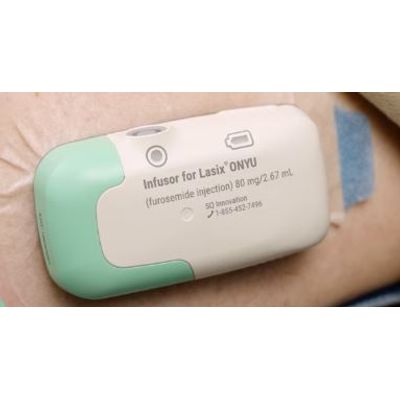
Lasix ONYU - Prescription Drug-device for Heart Failure
Lasix ONYU is an advanced prescription drug-device combination designed specifically for the treatment of edema in adults suffering from chronic heart failure. This innovative product represents a shift from traditional oral and intravenous methods by introducing a high-concentration formulation of furosemide for subcutaneous infusion. Each prefilled cartridge within the device delivers 80 mg of furosemide in a sustained manner over five hours, leveraging an on-body infusor system. The novel administration approach addresses absorption challenges often encountered with oral diuretics, offering enhanced bioavailability. The delivery system's components include a single-use drug cartridge and a reusable power unit, facilitating outpatient care without IV access. Through this model, Lasix ONYU allows effective diuresis while patients stay at home, improving clinical workflows and aligning with contemporary efforts towards outpatient heart failure management.
Lasix ONYU is a prescription drug-device combination that treats edema caused by fluid build-up for adult patients with chronic heart failure. It is designed for subcutaneous administration and intended as an at-home treatment option for eligible patients.
Lasix ONYU was designed to address challenges in managing edema outside of the hospital. In patients with edema, gastrointestinal edema can impair the absorption of oral diuretics, reducing bioavailability and limiting therapeutic response. Lasix ONYU delivers a high-concentration formulation of furosemide via subcutaneous infusion, achieving 112% absolute bioavailability relative to intravenous administration.
Subcutaneous administration enables effective outpatient diuresis without the need for IV access.
Lasix ONYU is available through emergency departments, outpatient clinics, and leading distributors, to ensure wide access. While it may be prescribed and dispensed in the ED or outpatient setting, treatment is intended to begin at home.
This delivery model supports flexible clinical workflows by enabling patients who do not require hospital admission to receive timely treatment at home. It also facilitates transitions of care and aligns with current efforts to expand outpatient management of heart failure.