


- Home
- Companies
- Starpharma Holdings Limited
- Products
- Starpharma - Prostate Cancer Drug ...
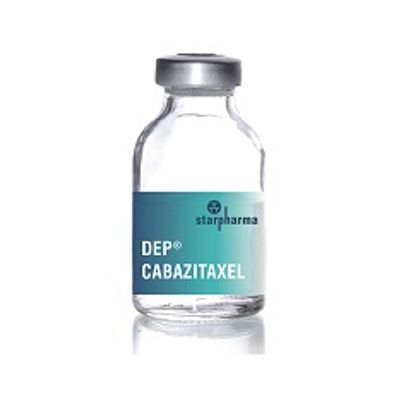
Starpharma - Prostate Cancer Drug Cabazitaxel
DEP® cabazitaxel is an enhanced version of leading prostate cancer drug cabazitaxel (Jevtana®). Cabazitaxel (Jevtana®) had global sales of €536M in 2020 despite having multiple US FDA “Black Box” warnings.
The advantages* of DEP® cabazitaxel include:
- Improved side effect profile
- Detergent-free formulation
- No steroid pre-treatment
- Tumour-targeting
- Improved efficacy
DEP® cabazitaxel has patent filings to 2039 (plus up to an additional ~5 years).
*Multiple preclinical studies have established improved efficacy, survival, and safety with DEP® with many different drugs.
DEP® cabazitaxel phase 2 program is well advanced. The program is an open-label trial, with the objective of establishing anti-tumour activity (efficacy) & safety.
Encouraging efficacy signals have been observed, including radiological responses, significant target tumour shrinkage and substantial tumour biomarker reductions (e.g. Prostate Specific Antigen - PSA), in cancers including prostate, ovarian, lung, gastroesophageal, head and neck, and other cancers.
DEP® cabazitaxel – phase 2 prostate cancer patients
- 25 heavily pre-treated patients (average age 73 years) with Stage (IV) hormone-refractory prostate cancer
- Average of 4 prior anti-cancer treatments and >70 cycles/months
- >95% had received prior taxanes, including docetaxel and cabazitaxel (Jevtana®)
- Patients received DEP® cabazitaxel at a dose of 20mg/m2 cabazitaxel
- No need for prophylactic steroids or antihistamines as polysorbate 80-free aqueous formulation
- No primary G-CSF4 prophylaxis required
DEP® cabazitaxel – phase 2 interim results in prostate cancer cohort^
100% of evaluable patients2 had one or more efficacy response:
- 64% had prolonged disease control for up to 36 weeks
- 18% had significant tumour shrinkage, a Partial Response (Jevtana® – 18.5%)
- 90% had a PSA decrease
- 52% had a ≥50% decrease in PSA (Jevtana® – 29.5%)
- 83% had no progression of secondary bone disease
- 56% evaluable for all three of these measures had responses in all three