


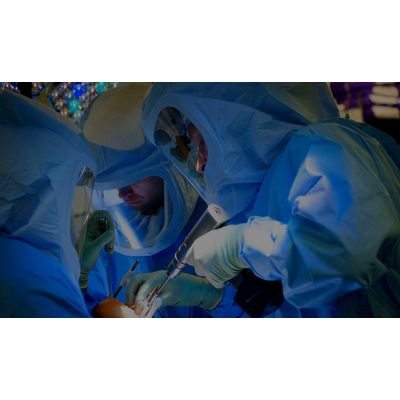
Embody - Model H1 -Surgical Technique
The H1 is a contoured ceramic-on-ceramic hip resurfacing arthroplasty system. It consists of two monoblock implant components (femoral head and acetabular cup) made of BIOLOX®delta with vacuum-plasma-sprayed titanium and hydroxyapatite for cementless fixation. The contours of the H1 components are designed to better reflect the native morphology of the femoral head and acetabulum. The H1 is supplied with size-specific singleuse instruments.
Patient Selection
The H1 is intended for use in patients requiring primary hip resurfacing arthroplasty due to:
- Primary osteoarthritis
- Osteoarthritis secondary to trauma, avascular necrosis, developmental hip dysplasia or other self-limiting conditions
The H1 contours
The contoured profile of the cup implant is derived from the natural profile of the acetabulum. This improves the fit around the acetabular rim and helps to avoid implant overhang, particularly anterosuperior at the position where the psoas tendon moves over the acetabular rim. It is therefore easier to place the cup at the target inclination angle of 45°, without overhang and the resulting risk of psoas impingement. In addition to positioning the cup at the appropriate inclination and anteversion angles, rotational orientation must also be considered. The target for cup rotation is to ensure that the region of maximum bearing coverage is positioned superiorly whilst the illio-pubic interval is aligned with the natural recess without overhang. In this position the anterior nose should be approximately 12° inferior to the true anterior position.
The contoured profile of the head implant is derived from the natural profile of the head neck junction. The profile reduces the risk of the implant rim overhanging at the head neck junction, particularly inferiorly where the psoas tendon passes over the edge of the implant, without compromising the flexion facets. The target for head rotation is to position the contours inferiorly and superiorly, with the extended bearing regions positioned anteriorly and posteriorly.