
Maternal Mortality Articles & Analysis: Older
15 news found

Despite medical advancements, the incidence of PPH is increasing in Australia and in the USA maternal mortality associated with hemorrhage has remained stagnant over the last forty years. Globally postpartum hemorrhage is the primary cause of nearly one quarter of all maternal deaths. There has been little advancement in ...

The goal of the 22-month project is to support the government of Kenya's commitment to reduce maternal and newborn deaths and obstetric-related injuries by improving the quality of caesarean sections. Seventy-one percent of facility-based maternal deaths in Kenya are associated with caesarean sections, and 9 out of 10 maternal deaths are linked ...

Jeff Wilkinson discovered the harsh reality of maternal mortality, stillbirths, and early neonatal deaths in Malawi. For every 100,000 live births there are 400 maternal deaths and for every 50 births, Malawi loses 1 baby. In Texas, the mortality rate is much lower – 14 (white) and 27 (Black) women per 100,000 live births. ...

Alydia Health is a commercial-stage medical device company focused on preventing maternal morbidity and mortality caused by postpartum hemorrhage (PPH) or abnormal postpartum uterine bleeding. PPH is one of the most common complications of birth, resulting in pharmacologic treatment in up to 10% of mothers and potentially resulting in emergency intervention such ...

The company’s flagship iPhone and iPad- compatible platform, Triton, is FDA cleared and CE Marked, and powers maternal hemorrhage protocols in hospitals performing over 250,000 annual procedures. ...
The United States has the highest maternal mortality rate in the developed world. According to the Centers for Disease Control and Prevention (CDC), 60 percent of pregnancy-related deaths are preventable. Postpartum hemorrhage is the leading preventable cause of maternal morbidity and mortality3, and obstetrics organizations such as the American ...
Gauss Surgical, a health technology company, announced that a new study published in the International Journal of Obstetric Anesthesia concluded that the use of the company’s Triton system to monitor maternal blood loss during labor and delivery was associated with earlier postpartum hemorrhage intervention and cost savings. ...
Over the last 15 years, preventable maternal deaths and harmful postpartum health complications for mothers have increased precipitously in the U.S. due to undetected hemorrhaging, particularly in cesarean deliveries. ...

Safe Surgery 2020 aims to reduce maternal and trauma-related mortality and create stronger health systems by transforming access, quality and safety of surgical care in regions that need it most: low-and middle-income countries. ...
Rapid population growth in high-fertility countries can exacerbate a range of existing problems–environmental (resource scarcity and pollution), health (maternal and child mortality), economic (unemployment, low wages and poverty), governmental (lagging investments in health, education and infrastructure), and social (political unrest and crime), explained ...
ImPACT Africa is a sustainable training program that aims to address maternal and infant mortality related to surgical intervention during childbirth through ongoing training of skilled healthcare workers. ...

Such work is closely aligned with the World Health Organization's vision for addressing the mother-to-child transmission of HIV and works toward achieving the Millennium Development Goals set to reduce child mortality and improve maternal health. This new call aims to stimulate grassroots community action in support of global PMTCT community efforts to eliminate ...

Millenium Development Goals - Health It is the poorest countries that suffer most from health-related development challenges, such as weak health infrastructure, high rates of poverty-related diseases, poor maternal health and unsatisfactory environmental conditions, all of which contribute to reduced life expectancy. Health issues also constitute a substantial part of the ...
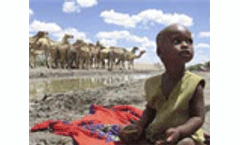
In Nairobi, for example, the under-five mortality rate is below 15 per 1000 in the high-income area. In a slum in the same city, the rate is 254 per 1000. “High maternal, infant, and under-five mortality often indicates lack of access to basic services such as clean water and sanitation, immunizations and proper nutrition,” said Ann M. ...

The Millennium Development Goals cover eradicating extreme poverty and hunger, achieving universal primary education, promoting gender equality, reducing child mortality, improving maternal health, combating HIV/AIDS, malaria and other diseases, ensuring environmental sustainability and fostering a global partnership for ...