
- Home
- Articles
- canada nova scotia
- clinical validation
Refine by
Clinical Validation Articles & Analysis
48 articles found
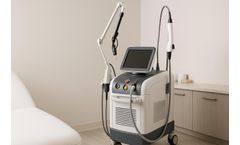
You’ve built an aesthetic practice with trained staff and a loyal patient base. As demand grows and competition increases, selecting the right laser platform becomes a strategic decision with implications for service mix, operational efficiency, patient satisfaction, and ROI over the long term.This article outlines how to differentiate scalable, modular platforms from single device systems, why ...
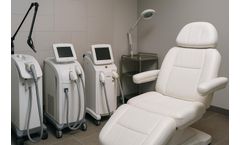
Launching a medspa is capital-intensive. Equipment decisions shape your treatment menu, clinical outcomes, patient experience, workflow efficiency, and long-term profitability. The goal is alignment: your devices should support your clinical philosophy, staffing model, and revenue strategy, not drive them. This guide outlines the essential equipment categories to evaluate before launching a ...

Why Routine Inspection, Cleaning/Disinfection, Manufacturer Checkups, and Backup Systems Matter Summary Dental and surgical loupes are not just magnification devices; they are clinical tools that impact infection control, visual performance, precision, and clinician posture. As a wearable device used in patient care environments, dental and surgical loupes are exposed to aerosols, spatters, ...

CAR-T cell therapy has transformed the treatment landscape for hematological cancers, yet its widespread adoption remains limited by the complexity of ex vivo manufacturing. Patient-specific cell collection, genetic modification, and reinfusion introduce high costs, long timelines, and scalability challenges. To address these barriers, in vivo CAR-T has emerged as a new strategy—engineering ...
As the end of the year approaches, many clinicians look for smart ways to invest in their practice while reducing taxable income. One powerful opportunity often overlooked is the Section 179 tax deduction — a U.S. tax incentive that allows businesses, including dental and medical practices, to deduct the full purchase price of qualifying equipment in the year it is placed in service. If ...

Medical advancement relies on clinical trials, which are essential for the development of safe and effective innovative treatments. However, the success and general applicability of these treatments heavily depend on the diversity of the participants involved¹?³. This blog explores the importance of achieving data diversity in clinical trials to enhance clinical trial results and ...

POCT (Point-of-Care Testing) refers to clinical and bedside testing conducted in close proximity to patients. It is often not performed by clinical laboratory personnel. POCT holds significant importance in disease prevention, etiology determination, prognosis, enhancing treatment outcomes, and reducing healthcare expenses. It meets clinical testing needs across various healthcare settings. POCT ...

People living with frontotemporal dementia, or FTD, are commonly misdiagnosed with psychiatric disorders or Alzheimer’s disease and other causes of dementia, such as Parkinson’s disease and vascular dementia. While frontotemporal dementia and Alzheimer’s disease can both cause dementia, there are distinct differences in impacted regions of the brain and, consequently, ...
Herb- and plant-based medicines have been used for as long as 60,000 years, with the first written record dating to 7,000 years ago. While these medicines have survived scientific evaluation with varying success, one in four medications currently used has a plant-based origin. One of the most successful medications treats a vector-borne disease. With all this history, why aren’t we ...

From clinical trial enrollment through completion, understanding medication adherence is critical to data integrity and AiCure offers a competitive edge where traditional methods fall short. To ensure trial participants are complying with dosing regimens, sites often rely on traditional patient reported outcome systems with participant diaries, which can be unreliable. Also in common use are ...
ByAiCure
Nanostics’ biomarker and machine learning-powered test, ClarityDX Prostate®, received a CE-IVD Mark. A CE-IVD Mark is required for all in vitro diagnostic (IVD) devices to be placed in the European Economic Area, Iceland, Norway, and Liechtenstein and allows Nanostics to market and sell ClarityDX Prostate® in these countries. The ClarityDX Prostate® test provides patients ...
Real-world data shows that at a 94% sensitivity level for prostate cancer ClarityDX Prostate® is 147% more specific than the PSA test for predicting clinically significant prostate cancer. Using ClarityDX Prostate® as a reflex test vs. PSA test alone could have resulted in 37% fewer unnecessary biopsies. The clinical study recruited men from two sites in Alberta, Canada, and one site ...
Clinical study launched in June 2022 with patient recruitment in Alberta with plans to expand to further sites across North America. The aim of the study is to validate a novel and minimally invasive liquid biopsy test for bladder cancer diagnosis using Nanostics’ ClarityDX® diagnostic platform. The study is supported in part by the Alberta Innovates AICE-Concepts Program with a ...
Meditation is often thought of as an avenue to clarity and self-awareness, but it may also be an avenue to better brain health. Emerging research suggests meditation may have significant benefits to brain health, ranging from improved mental and behavioral health to enhanced cognitive function. In this article, we will break down how meditation helps the brain and provide helpful tips for ...
Many neurological diseases, including Alzheimer’s disease, can be thought of as continuums, whether the presence and manifestation of the disease are different depending on the stage of the disease. In this article, we provide a high-level overview of the stages in the Alzheimer's disease continuum, with a focus on preclinical Alzheimer’s disease and its importance in patient care and ...

Linear Health Sciences was featured in MassDevice focused on the GCMI/LHS Partnership Medical device accelerator the Global Center for Medical Innovation has issued its 1st grant to Linear Health Sciences, developer of the Orchid safety release valve designed to prevent dislodgment of IVs. The Oklahoma City-based company said it is developing safety release valves for a variety of medical ...
In addition to the pandemic, the digitization of healthcare is rapidly shifting clinical trials from analog to hybrid or fully decentralized clinical trials, catalyzing the development and implementation of digital health technologies to support clinical research. Digital endpoints not only support the decentralization of clinical trials but also provide a means to collect more sensitive, ...
Alzheimer’s and Parkinson’s disease are both neurological diseases that cause progressive damage to the brain, resulting in a decline in neurocognitive function. While Parkinson’s disease is known for affecting movement and function and Alzheimer’s disease is known for affecting cognition, they are a bit more complex than that. Below, we provide an overview of ...
In recent years, targeted protein degraders have entered the mainstream of drug development at a very rapid rate. Thalidomide and its derivatives for the treatment of multiple myeloma and other conditions have demonstrated the potential of protein degraders, while ARV-471, an estrogen receptor degrader based on the drug development of thalidomide, is targeted at the early stage of breast cancer ...
Parkinson’s disease is a progressive neurodegenerative disease that is most commonly known for affecting movement. It primarily impacts dopaminergic, or dopamine-producing, neurons in a specific area of the brain known as the substantia nigra. Typically, symptoms develop slowly over years and continue to worsen as the disease progresses. While the manifestation of symptoms tends to vary ...