
Refine by
Sampling Container Articles & Analysis
13 articles found

Our kinetic analyses indicate that while traditional reaction buffers containing 10mM Mg²⁺ are sufficient for plasmid templates, complex genomic DNA samples benefit from supplementation with 0.5-1.0mM Mn²⁺, which enhances the enzyme's processivity on supercoiled substrates. ...
Our kinetic analyses indicate that while traditional reaction buffers containing 10mM Mg²⁺ are sufficient for plasmid templates, complex genomic DNA samples benefit from supplementation with 0.5-1.0mM Mn²⁺, which enhances the enzyme's processivity on supercoiled substrates. ...

Latex Agglutination Assays: The Role of Dyed Polystyrene Particles Latex agglutination is the change in agglutination capacity observed when a sample containing a specific antigen is mixed with antibodies coated on the surface of latex particles. Agglutination can also be reversed by coating latex particles with specific antigens and testing the ...

Although intrinsic fluorescence detection is a powerful tool, it has some limitations, such as potential interference from quenchers or signal overlap when the sample contains large amounts of aromatic amino acids. Therefore, intrinsic fluorescence detection is often combined with other analytical methods (such as circular dichroism, X-ray crystallography, or ...

Although intrinsic fluorescence detection is a powerful tool, it also has some limitations, such as potential interference from quenchers or signal overlap when the sample contains large amounts of aromatic amino acids. Therefore, intrinsic fluorescence detection typically needs to be combined with other analytical methods (such as circular dichroism and nuclear ...

Discover how matched tumor-normal sequencing can help clinical researchers detect the somatic origin of variants with certainty. In the era of precision oncology, it has become increasingly common for patients diagnosed with cancer to undergo tumor sequencing. Identifying the mutations that make up a tumor’s genomic landscape can help guide selection of targeted therapies and inform ...

So another requirement was the ability to create virtual containers of different shapes and sizes to show where in each container the samples are actually located. ...
Increased sensitivity and specificity: Each particle of colored polystyrene nanoparticles is carefully designed in size and coated with specific ‘capture molecules’ designed to trap their intended targets. When samples containing target molecules are introduced, these coated particles act like magnets, attracting their specific targets with high ...

Kits are shipped directly to users and completed samples are shipped back, so participation is possible without ever leaving home. Using Tasso would produce the patient-centric sampling experience and high quality blood sample that the Theberge Lab needed. The Theberge Lab designed a participant sampling kit, called homeRNA, ...

Ion chromatography and sample filtration go hand-in-hand since this pretreatment step is advised for the majority of sample matrices. It is essential to avoid injecting particles, algae, or bacteria into the IC system, as these can jeopardize both the instrument and the separation column. Samples are often prepared manually, for example by using filtration or centrifugation to remove contaminants ...
ByB&W Tek
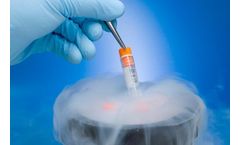
One disadvantage is the need for manual filling, however, these cryogenic storage tanks/dewars tend to have narrow neck openings which reduces the static evaporation rate and increases the holding time.Auto FillThe auto-fill cryogenic storage tanks typically contain between 6,000 – 50,000 samples, sometimes more. The large capacity enables the cryogenic storage ...
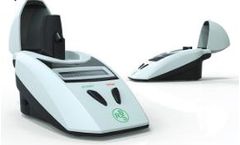
The TB Breathalyzer, patented by Rapid Biosensor Systems, consists of a plastic cough sample collection tube (10 cm in length and 3.5cm in width) containing a bio-optical sensor covered in a patented bio-chemical coating formulated to react with the TB bacilli. ...

When possible, bilateral HAV and ePTFE samples were implanted within each animal. After insertion of the ePTFE or HAV material into the subcutaneous pocket, 0.25 mL of solution containing either 107 colony-forming units (CFUs) of grampositive S. aureus (S. aureus [ATCC #25923]) or 108 CFU of gram-negative E. coli (E. coli [ATCC #25922]) bacteria were directly ...