


- Home
- Companies
- COSMED srl
- Products
COSMED srl products
Indirect Calorimetry
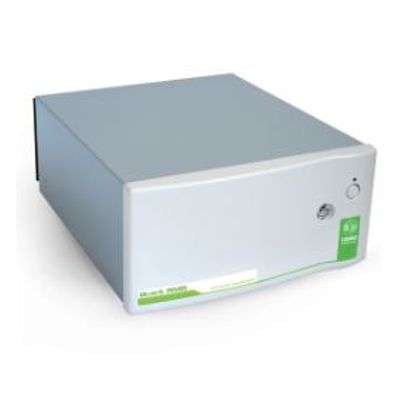
Quark RMR - Metabolic Cart
The Quark RMR is a state-of-the-art metabolic cart designed for accurate measurement of Resting Energy Expenditure (REE) and respiratory ratio (R), in a non-invasive way, through the measurement of oxygen consumption (VO2) and carbon dioxide production (VCO2) together with other ventilatory parameters. Energy requirements are monitored accurately and instantaneously either on spontaneously breathing subjects with a flow-dilution canopy hood or (optionally) to mechanically-assisted patients by inserting directly at the patient’s circuit a disposable flowmeter (Flow-REE). The number of available configurations make the Quark RMR the most versatile metabolic cart for applied research in human physiology. Quark RMR’s accuracy and reliability have been validated against Gold Standard methods either with spontaneously breathing subjects (at rest and during exercise) and mechanically assisted patients.
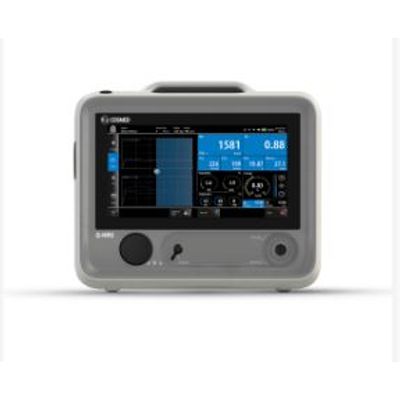
Q-NRG - Metabolic Monitors for Indirect Calorimetry in Clinical Practice
Introduced by COSMED, worldwide leader in the design of metabolic systems for clinical and human performance applications, Q-NRG is the first Indirect Calorimeter specifically intended for Resting Energy Expenditure (REE) measurement on spontaneously breathing subjects.
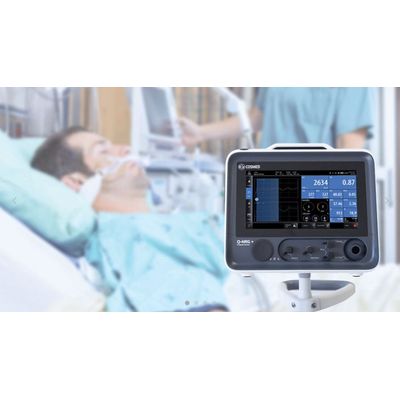
COSMEd - Metabolic Monitor
Introduced by COSMED, worldwide leader in the design of metabolic systems for clinical and human performance applications, Q-NRG is the first Indirect Calorimeter specifically intended for the measurement of Resting Energy Expenditure (REE) in patients who are mechanically ventilated or spontaneously breathing and for healthy subjects. Indirect calorimetry remains the Gold Standard in measuring energy expenditure in clinical settings, proven to have enormous advantages compared to Predictive Equations2. In fact, this measuring technology provides an individual and dynamic metabolic assessment based on the actual physical status of the subject rather than estimating it on anthropometric data.