
- Home
- Downloads
- us virgislands
- immune cell
immune-cell Downloads
8 downloads found
4-1BB (CD137/TNFRSF9), a member of the tumor necrosis factor receptor superfamily, is an inducible co-stimulatory receptor expressed on T cells, natural killer (NK) cells and innate immune cell populations. When present on the cell surface, 4-1BB interacts with 4-1BB ligand (4-1BBL) and induces subsequent ...
The antibodies used to stimulate T cell activation via interaction with co-stimulatory receptors on the effector cells can be cross-linked via binding to FcγRIIb receptors on CHO-K1 cells. Based on the properties of the antibody tested, the Co-Stimulatory Immune Checkpoint (i.e., OX40, CD40, GITR and 4-1BB) bioassays can ...
The TotalSeq™-A Human TBNK Cocktail has been designed to react with immune cells as defined and classified by the expression of the surface antigens CD19, CD3, CD16, CD4, CD11c, CD56 (NCAM), CD14, CD8, ...

MHC Tetramers have emerged as an important tool for characterization of the specificity and phenotype of T cell immune response, useful in a large variety of disease and vaccine ...

Good bacteria from birth: The intestinal flora performs several important functions including the development of the immune system. including the development of the immune system, more than 60% of all our immune cells are in our gut. The digestive tract of the unborn child is sterile prior to birth. Once the baby is born, its intestinal flora will be colonised by bacteria and yeasts. The flora ...
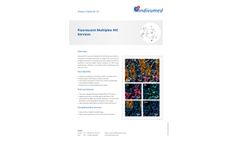
Cancer immunology, or “immuno-oncology,” is a growing field of research that aims to discover innovative cancer immunotherapies to treat and impede the progression of the disease. Understanding how cancer evades the immune system is the basis of immuno-oncology. With Indivumed’s scientific support you can, for example, identify the different types of immune cells and their ...
Indica Labs’ Highplex FL module allows for simultaneous analysis of an unlimited number of fluorescent markers in any cellular compartment – nucleus, cytoplasm, and/or membrane. With the option to define specific cell phenotypes according to marker positivity, this module is ideally suited for applications in immuno-oncology where multiple markers are required to characterize ...

In this 90-minute accredited online session we will review the current knowledge about the effects of solar radiation on skin, illustrate the correlation between UV damage and the clinical consequences of exposure to UV, discuss direct and indirect damage such UV absorption and DNA damage, photosensitizers and the generation of reactive Oxygen species, membrane damage, impairment of ...